Powered By Blogger

10.04.2011

Week 6 Step 2

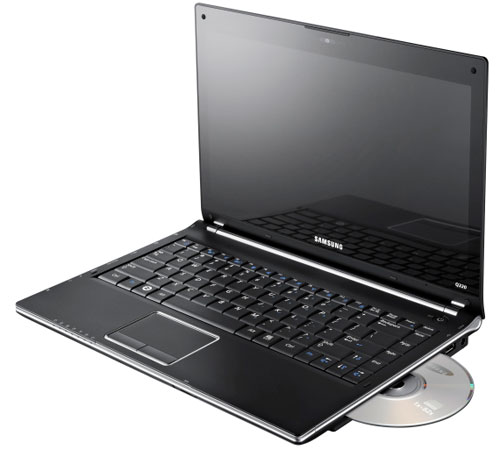
1. With this device you can cook cakes
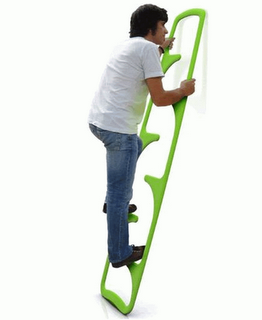
2. This thing needed on the farm
3. This gadget will help you if you're hungry
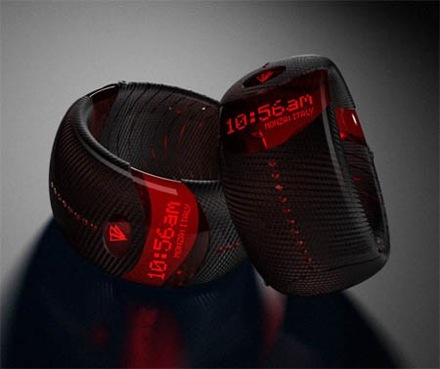
4.  Life without him is unthinkable, is now ..
 

Week 6 Step 1

Top 5 must have gadgets
  1. Apple iPad 2 (16GB, Wi-Fi)
2. Audioengine 5 
3. Flip UltraHD
4. Klipsch Image S4i earphones with mic
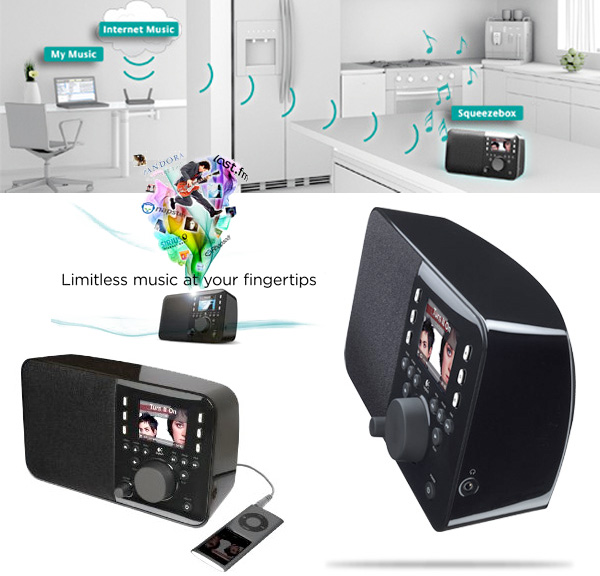
 5. Logitech Squeezebox Radio

Top 5 strange or funny gadgets
 1. 
2. 
3.
4.
5.

Top 5 “green” gadgets
 1.
2.
3.
4.
5.

Top 5 gadgets for students

 
Top 5 gadgets of 2011
1.
2. 
3. 
 
4.
5.


Week 5 Step 3 Gadgets and Inventors


Week 5 Step 2 Gadgets and Inventors

Internet 
1. October 29, 1969 at 22:30 in the University of California Los Angeles (UCLA) and the Stanford Research Institute (SRI).
2.Charley Kline and Bill Duvall.
3 .It is a universal global information environment.
YouTube 
1.Founded in February 2005 by three former PayPal employees in San Bruno, California.
2.Steve Chen, Chad Hurley, Jawed Karim.
3. YouTube hosted videos. Users can add, view and comment on these or other videos. Due to the simplicity and ease of use, YouTube has become a popular video sharing site and the third in the world in the number of visitors.
 Large Hadron Collide
1.The idea of the Large Hadron Collider Project was born in 1984 and was formally approved by ten years later. Its construction began in 2001.
2.Project Manager - Lyn Evans.
3.BAC will conduct experiments that had previously been impossible to conduct and is likely to confirm or refute some of these theories. Thus, there is a spectrum of physical theories with dimensions greater than four, which suggests the existence of "supersymmetry" - for example, string theory, sometimes called the superstring theory is due to the fact that, without supersymmetry, it loses its physical meaning. Confirmation of the existence of supersymmetry, so be indirect evidence of the truth of these theories.
Web camera  
1.The first ever webcamera was launched in 1991 and showed the coffee maker in the Trojan Room of Cambridge University.
2.Quentin Stafford-Fraser, Paul Dzhardetski, Daniel Gordon, Martin Johnson
3. Web camera allows one to Internet users contemplate the world through the camera connected to the Internet by other users.
GPS-navigator  
1. Company Magellan - creator of the first portable GPS-navigator, developed in 1989.
2. - 
3.Originally they were created for military purposes and only later they became available for civil aviation and the navy. Currently, service systems, gps and GLONASS are available to anyone. From personal experience I know that sometimes not enough of such systems when making trips to the mountainous terrain.
iPod  
1. October 23, 2001
2. Steve Jobs
3. Not the least factor in the popularity of iPod, is a huge variety of accessories created specifically for him. At its core, iPod is a complete system that includes all the necessary only. But the player can easily be expanded and supplemented. You can make your iPod Voice Recorder, throw off while on vacation at the pictures from your camera, connect the player to the car, attach a variety of neurotransmitters and organize a mini-radio station. With the help of special covers you can wear your iPod to a belt, arm, neck, leg. If you're away from civilization, and the battery is discharged, the adapter will allow 12:00 to listen to music with simple battery. You can even connect to the iPod flashlight and laser pointer.
Yota
1.2007
2. 10% owned by a Cypriot company WiMax Holding Ltd., 74,9% of which belongs to the fund Telconet Capital Limited Partnership, 25,1% - "Rostekhnologii". CEO - Dennis Sverdlov.
3. There are several ways to connect to Yota. This USB-modem, ExpressCard-modem or built-in support for WiMAX laptop, netbook or a smartphone. Also, the subscriber can use the device, multiple access - a router. In particular, Yota offers several such devices - «Mobile WiMAX / Wi-Fi Center from Asus supports Wi-Fi and VoIP, router ZyXEL MAX-206M2 and WiFi access point is self-powered Yota Egg.

09.04.2011

Week 5 Step 1 Gadgets and Inventors


  Internet - a worldwide system of computer networks combined, based on the use of IP routing and data packets. Internet forms a global information space, is the physical basis for the World Wide Web, and many other systems (protocols) data transfer. Often referred to as the "World Network"and "Global Network". In common parlance is sometimes referred to "'Net. "
  At the present time when the word "Internet" is used in everyday life, most often refers to the World Wide Web and accessible information in it, but not the physical network.

  After starting the Soviet Union, Sputnik in 1957, the U.S. Defense Department decided that in case of war, America needs a reliable system of information transmission. Agency Defense Advanced Research Projects United States (DARPA) has proposed to develop for this computer network. Developing such a network was assigned to the University of California Los Angeles, Stanford Research Center, University of Utah and the University of California at Santa Barbara. The computer network was called ARPANET (Advanced Research Projects Agency Network), and in 1969, the project brought together a network of four of these academic institutions. All work funded by the Ministry of Defense. Then the ARPANET began to actively grow and develop, it began to use scientists from different disciplines. 
   The first server ARPANET was installed September 2, 1969 at the University of California at Los Angeles. Computer Honeywell DP-516 had 24 KB of RAM. 
   October 29, 1969 at 21:00 between the first two nodes of the network ARPANET, located at a distance of 640 km - the University of California Los Angeles (UCLA) and the Stanford Research Institute (SRI) - had a communication session. Charley Kline (Charley Kline) tried to execute a remote connection to a computer at SRI. The successful transmission of each character, his colleague Bill Duvall (Bill Duvall) from SRI confirmed by telephone. 
   The first time was able to send all three characters «LOG», after which the network ceased to function. LOG was to be short LOGON (team login). In working state the system has returned to 22:30 and the next attempt was successful. It is this date may be considered the birthday of the Internet.

YouTube - service that provides a video hosting service. Users can add, view and comment on these or other videos. Due to the simplicity and ease of use, YouTube has become a popular video sharing site and the third in the world in the number of visitors. Daily number of video views on this site is more than 2 billion. The site includes a professionally filmed and clips and amateur video, including video blogs.
   The project was founded in February 2005 by three former PayPal employees in San Bruno, California. They used the technology to Flash Video (flv), allowing a relatively good quality recording with a small amount of data transmitted. The project was a good means of entertainment, and formed his community, according to statistics, market research firm Alexa, ahead of most popular social network MySpace. 
  In November 2006, was completed purchase of YouTube by Google for 1.65 billion dollars. Before buying YouTube, Google had a similar service orientation - Google Video. Google representatives did not intend to close it, and will use it as a place for video search on all videohostingovym sites. Currently searching Google Video includes YouTube. 

  Large Hadron Collider (LHC) - an accelerator of charged particles in colliding beams, designed to accelerate protons and heavy ions (lead ions) and study the products of their collisions. Collider built at the research center of the European Council for Nuclear Research (Fr. Conseil Européen pour la Recherche Nucléaire, CERN), on the border of Switzerland and France near Geneva. BAK is the largest research facility in the world. Project Manager - Lyn Evans. In construction and study participated with more than 10,000 scientists and engineers from more than 100 countries. 

  The big named because of its size: the length of the main ring accelerator is 26 659 m; Hadron - due to the fact that it accelerates hadrons, ie particles composed of quarks; Collider - due to the fact that the particle beams are accelerated in opposite directions and collide at special points of collision.


  Web camera - digital or video camera, capable of real-time display of images intended for transmission over the Internet (in programs such as Skype, Instant Messenger or any other video). 
Webcams, delivering images over the Internet, upload images to a web server or on request, either continuously or at regular intervals. This is accomplished by connecting the camera to a computer or because of the opportunities of the camera itself. Some advanced models have hardware and software, which allows the camera to work independently as a Web server, FTP-server, FTP-client and (or) send images by email.
Webcams designed for video conferencing - it's usually a simple model cameras that connect to a computer that is running a program such as Instant Messenger.
Camera models that are used in protective purposes, may be fitted with additional devices and functions (such as motion detectors, the connection of external sensors, etc.)

  The first ever webcam was launched in 1991 and showed the coffee maker in the Trojan Room of Cambridge University. She does not work, because it was disabled August 22, 2001.
  Like many network technologies, webcams and video chat have acquired mass popularity. The need for a "live" video generated webcam that can broadcast over the Internet in video format, which does not require the viewer to manually update the file, and soon, unnecessary in modern browsers have a special plug-ins. 
The webcam contains a lens, optical filter, a CCD or CMOS matrix, the scheme of digital image processing, image compression scheme and an optional Web server to connect to the network.
 

  GPS-navigator - a device that receives signals of global positioning system to determine the current location of the device on Earth. GPS devices provide information about the latitude and longitude, and some can also calculate the height.
  In GPS-navigator, there are several important components, which largely depends on the accuracy and quality of the instrument:
  - GPS chipset - the processor, the most important part of any browser;
  - RAM;
  - display for displaying information.
 Modern car navigators are able to plot a route taking into account the traffic management and implement targeted search. They may have an extensive base infrastructure, which serves to quickly search for catering, petrol stations, places for parks and recreation. Some models are able to receive and consider for routing information on the situation on the roads as possible to avoid serious congestion. Traffic information can be obtained by the navigator mobile communication via GPRS protocol or from the radio broadcast on channel RDS band FM.

  Portable travel navigators designed for tourism (water, mountain, hiking) and outdoor activities. Typically, such navigators have waterproof standard (IPX7), able to work and receive the satellite signal in the toughest conditions of the thick forest and mountainous terrain. They involve the use of special topographic maps. In addition, some models have additional features that may come in handy on long hikes, including the magnetic compass and barometric altimeter.
  Sports novigators used in training and during competition the athletes involved in cyclic sports outdoors (running, skiing, cycling). Ensure joint registration of state parameters of an athlete (heart rate), together with the parameters of motion (trajectory, speed, distance, climb). Performance - waterproof with minimal dimensions and weight. Performed in the case of watches to be worn on the hand in a rectangular box for mounting on the handlebar. Equipped with external sensors (contact sensor heart rate sensor, turn the pedals a bicycle, a sensor of steps) that communicate with the main unit via radio. Can be equipped with built-in barometric altimeter.
  Availability of maps significantly improves user performance navigator. Navigation with maps indicate the position of not only the receiver but also the objects around him. 
   All e-GPS-maps can be divided into two basic types - vector and bitmap(raster). 
   Raster maps - this is the easiest and most accessible type of cards. In fact, this image areas, which are linked geographic coordinates. Scale Raster map depends on the original version, or a picture from a satellite or scanned paper maps.
 Vector map is a database that stores information about objects, their characteristics and mutual location, geographic coordinates, and so on. In the cards can store a variety of characteristics of terrain: mountains, rivers, lakes, depressions, roads, bridges, levels of anthropogenic pollution, vegetation types, the location of power lines. Also, many detailed maps of the store a lot of facilities such as gas stations, hotels, cafes and restaurants, parking, traffic police office, forbidden to travel zones, tourist attractions and monuments, cultural artifacts and hospitals.


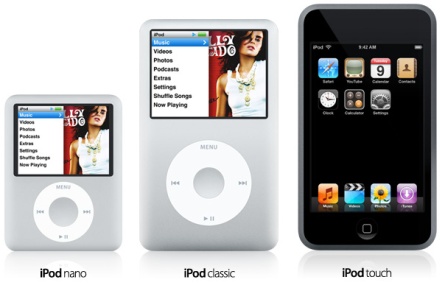
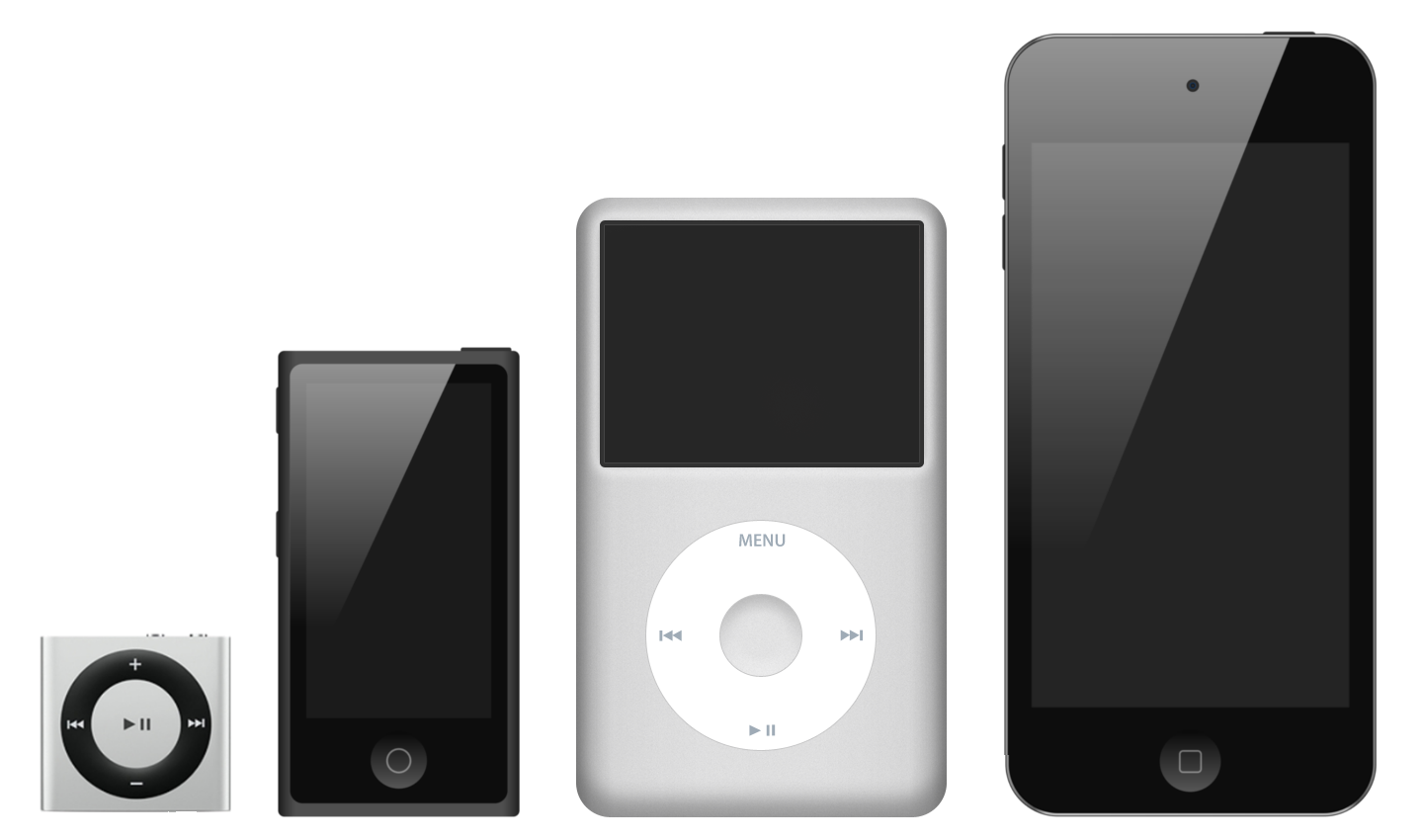
 iPod - brand series of portable media players by Apple, as storage media using flash memory or, in some models, the hard drive (the most famous - iPod classic). The debut of the brand was held October 21, 2001. At a press conference «The Beat Goes On», held on Sept. 5, 2007 in San Francisco, Steve Jobs announced that at the time it was sold 110 million players, iPod.
  In the current lineup consists of the following series: iPod classic, iPod touch, iPod nano, as well as bezekrannyh iPod shuffle. For the former series, whose production is stopped, include iPod mini (replaced it with iPod nano) and iPod photo (was reworked and included in the main line of iPod classic). IPod classic models are used to store built-in hard drive, while all others (except the mini, using the drive Microdrive) use flash memory, so have a miniature size. Like most modern digital audio players, iPod players support the connection to the computer as an external hard drive on the USB-interface, but downloading music for playback on the player officially allowed to carry only using the program iTunes, available only for Windows and Mac OS.


 Yota - brand name companies in the WIMAX Holding Ltd. (In Russia - LLC Scartel). Yota works in Russia and Nicaragua.
  The company announced the division into two parts, from "Skartel was selected company of" Iota ", which will service customers. Yourself Skartel "will operate under the brand name Yota Networks and deal exclusively with the network infrastructure. Right to use the infrastructure Yota Networks received MTS, VimpelCom (the network operator Beeline), Megafon and Rostelecom. "Iota", as these four operators will be able to buy traffic from "Skartel" according to the same rates. Such an approach would allow all five operators have the same right of access to Yota Networks. In addition to the traffic infrastructure company plans to sell the operators and service priorities for different customers (Quality of service).

 Scartel is a nonprofit international association of developers and equipment manufacturers WiMAX Forum, bringing together companies working in the field of technology and services to wireless broadband. Partners Scartel »- Samsung Electronics Co. Ltd. and ASUSteK Computer Inc.
Yota brand developed by the British agency «300million». The main message of the brand - look at familiar things from a different angle. As a logo image selected man standing upside down.
Scartel develops and provides mobile services on technology Mobile WiMAX (standard IEEE 802.16e-2005). At the same time, to attract subscribers, operates the misconception that the services provided by the company owned the standard 4G. In autumn 2008, Scartel Russia's first deployed Mobile WiMAX network in Moscow and St. Petersburg in the range of 2,5-2,7 GHz. The company owns its own base stations and main lines of communication.


Week 4 Step 2 Gadgets of the Future


   Japanese physicists have found an opportunity to create small holographic images of objects that preserve the natural color with white backlighting and examining all angles.

  The process of hologram recording, implemented by the Japanese, it is standard and based on the "resignation" of the two waves, one of which goes directly from the source and the other is reflected from the sample. The resulting interference pattern retains a layer of photoresist is deposited on a glass plate. Certainly, when writing, you can use just three laser (red, green and blue), but the authors treated one by changing the geometry of the experiment three times and repeating the exposure.

  Selected scholars method of image reconstruction, by contrast, is not trivial. On a layer of photoresist are deposited metallic - gold or silver - cover, while "playing" the hologram it was irradiated with white light at three different angles. The meaning of this is to create a resonance condition for surface plasmon polaritons on separate wavelengths.

  Let us explain: surface plasmon polaritons are called quasiparticles, arising from the interaction of photons and electrons (surface plasmons) in metal, ie a fall of white light on the workpiece. These quasiparticles are distributed in the form of surface electromagnetic waves along the interface and, most importantly, can themselves be converted into photons, by which revolutionized physics and the red, green and blue versions of the hologram and got full-color image.

  The testing procedures were established and quality small - measuring about two inches - the hologram apple, flower, classic origami (crane) and some other objects.

  However, for practical use of technology is not suitable: it is not very cost effective, yields only static hologram and does not scale. "I'm more interested in the physics of the process - said one of the study participants Satoshi Kawata (Satoshi Kawata), representing the University of Osaka. - No one thought that the plasmons can be used for imaging, as we have shown that it's real. "


Week 4 Step 1 Gadgets of the Future

  I found myself in the future in 2050. In the room where I was a lot of unfamiliar things. Suddenly, the room was a man. His name is Bernard. He was very hospitable. Bernard likes to play in the "city".

Holography (from the Greek. Holos - whole and graph - write) - a way to obtain three-dimensional images of objects on a photographic plate (hologram) with coherent laser radiation. A hologram captures the image itself does not object, but the structure reflected from the light wave (its amplitude and phase). To obtain a hologram requires that a photographic plate at the same time were two coherent light beam: the subject, reflected from the subject, and the support - comes directly from the laser. Light the two beams interfere, creating an alternate on the plate is very narrow light and dark bands - an interference pattern.

 At the time we played in the city with Bernard, came to us Monica and brought a cup of coffee. Monica - is a robot, she does all the housework: preparing cleans, washes, etc.
For a long time we raced with Bernard on flying cars, that I did not notice how time flew. I was going home.

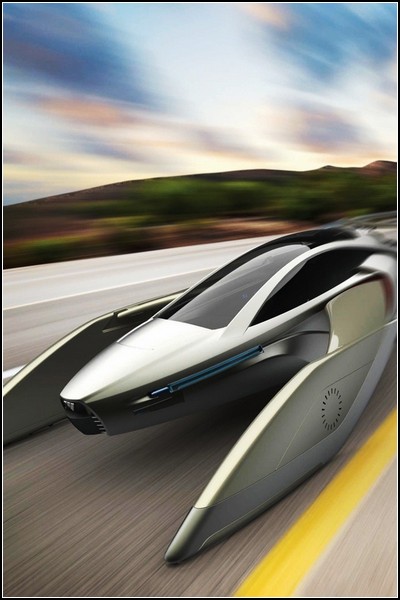
Flying car - a vehicle that combines the properties of the car and aircraft. Moreover, the ratio of these properties in different models may be different. That is, for some developments may be more of a formula: "the car, but it flies. " For others, the development of a formula is valid: "aircraft, but the riding. " It is clear that the first predominantly a better ride than fly. Second, on the contrary, better fly than drive. However, both for those and other important, not only the ability to fly and move along the ground.

  We went into the hall, with an incomprehensible situation. I was sad to part with Bernard. Bernard called me yet for a visit and say goodbye.
   I was instantly teleported back home.


 Teleportation - the general name of hypothetical processes, using which an object can move from one place to another in a very short period of time (almost instantly), not existing at intermediate points between them, with the help of technological methods, or paranormal phenomena. Technological methods involve, for example, how to create information about the internal structure and properties of a material object located in the same point in space, the transfer of such information and recreate in a very short period of time (canonically - instantly) to another point in the space of a material object with internal structure and properties identical to the first - at the same object at the first point in the transmission of information disappears, and the body material or substance used as a carrier of information from which then recreates the body or substance that is identical to continue. In fiction - instantaneous displacement of a material object from one point in space to another. A term coined in 1931 by the American writer Charles Fort to describe the strange disappearances and appearances, paranormal phenomena, which in his view had something in common. He joined the Greek prefix tele-(meaning range) from the Latin verb portare, (meaning bear). Fort originally used the word in his book Lo!, 1931.

This is sometimes described as one of the hidden abilities of the mind. Used word-substitutes: dzhantatsiya, transgression, the zero-transmission, zero-jump giperskachok, hyperspace.


Week 3 Step 2 Gadgets of the Present

1. Microwave oven (or microwave oven, microwave obsolete accent) - household appliance, designed for fast food or quick-heating food, thawing food and heating materials (adhesives) for production purposes. Usually operates at a frequency of 2450 MHz, although in some industrial furnaces frequency of the radiation may vary.

2. Laptop (notebook, notebook PC) - a portable personal computer, in the case which combined the typical PC components, including display, keyboard and pointing device (usually a touch pad or touch pad), handheld computer, as well as batteries. Notebooks is small in size and weight, battery life of laptops varies from 1 to 15 hours.
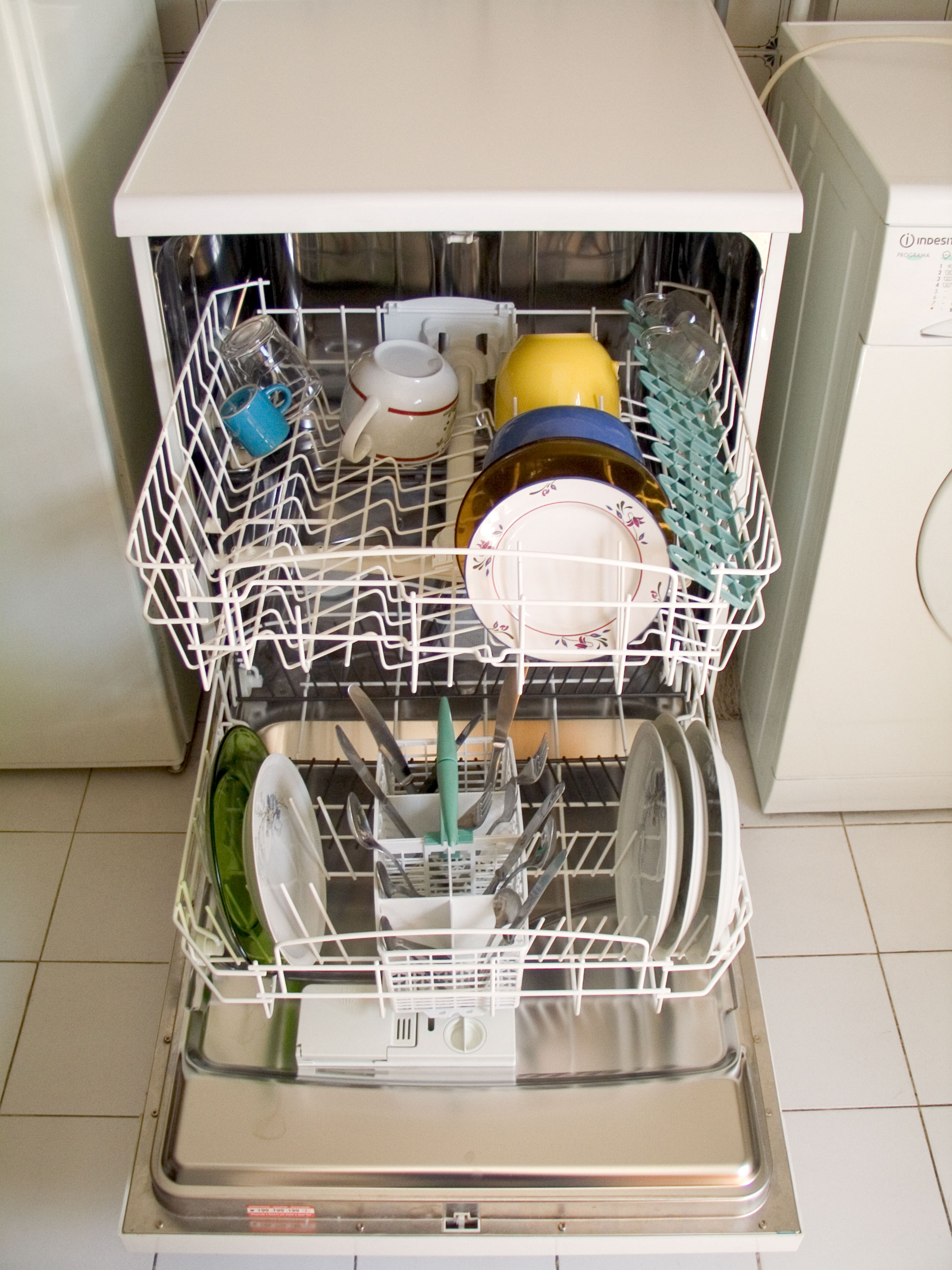
3. Dishwasher - an electromechanical device for automatic dishwashing. Used both in catering establishments, as well as at home. Dishwasher is connected to electricity, water and sanitation.
4Fridge - a device that maintains a low temperature in a thermally insulated chamber. Usually used to store food or items that require storage in a cool place (drugs, cosmetics). Household refrigerator is almost every family in developed countries. Work refrigerator based on the use of heat pump, which transfers heat from the working chamber of the refrigerator outside, where it is dissipated into the environment. There are also industrial refrigerators, the volume of the working chamber which can reach tens or hundreds of cubic meters, they are used, for example, in catering, meat processing plants, industrial production.

Refrigerators can be divided into two types: medium-temperature chamber for food storage and low temperature freezers.

5. Hair dryer - electric appliance, permitting a directed flow of heated air. The most important feature is the ability to supply a hair dryer heat exactly in the specified area. Origin of the word hair dryer is connected to the German mark FOEN, registered in 1941 and refers to a warm Alpine wind dryer. 


Week 3 Step 1 Gadgets of the Present

1. A vacuum cleaner is a device that uses an air pump to create a partial vacuum to suck up dust and dirt, usually from floors. The dirt is collected by either a dustbag or a cyclone for later disposal.
2. A smartphone is a mobile phone offering advanced capabilities, often with PC-like functionality.
3.An autopilot is a mechanical, electrical, or hydraulic system used to guide a vehicle without assistance from a human being.
4. The Internet is a global system of interconnected computer networks to serve billions of users worldwide. 
            .         

Week 2 Step 3 Gadgets of the Past


  The survey was conducted among all strata of the population. The results showed that the pencil is not the first place in people's lives.
   I counted up the results and found that students, teachers, doctors, businessmen, etc. use a pencil more often. Pensioners, unemployed and less likely to use a pencil, etc, but nevertheless, 70 percent of respondents agree that it is necessary to improve its capabilities. It is also important to note that half of respondents believe that in future we will use a pencil to a lesser extent. This can be justified by the fact that technology going forward.

05.04.2011

Week 2 Step 2 Gadgets of the Past

IPod 

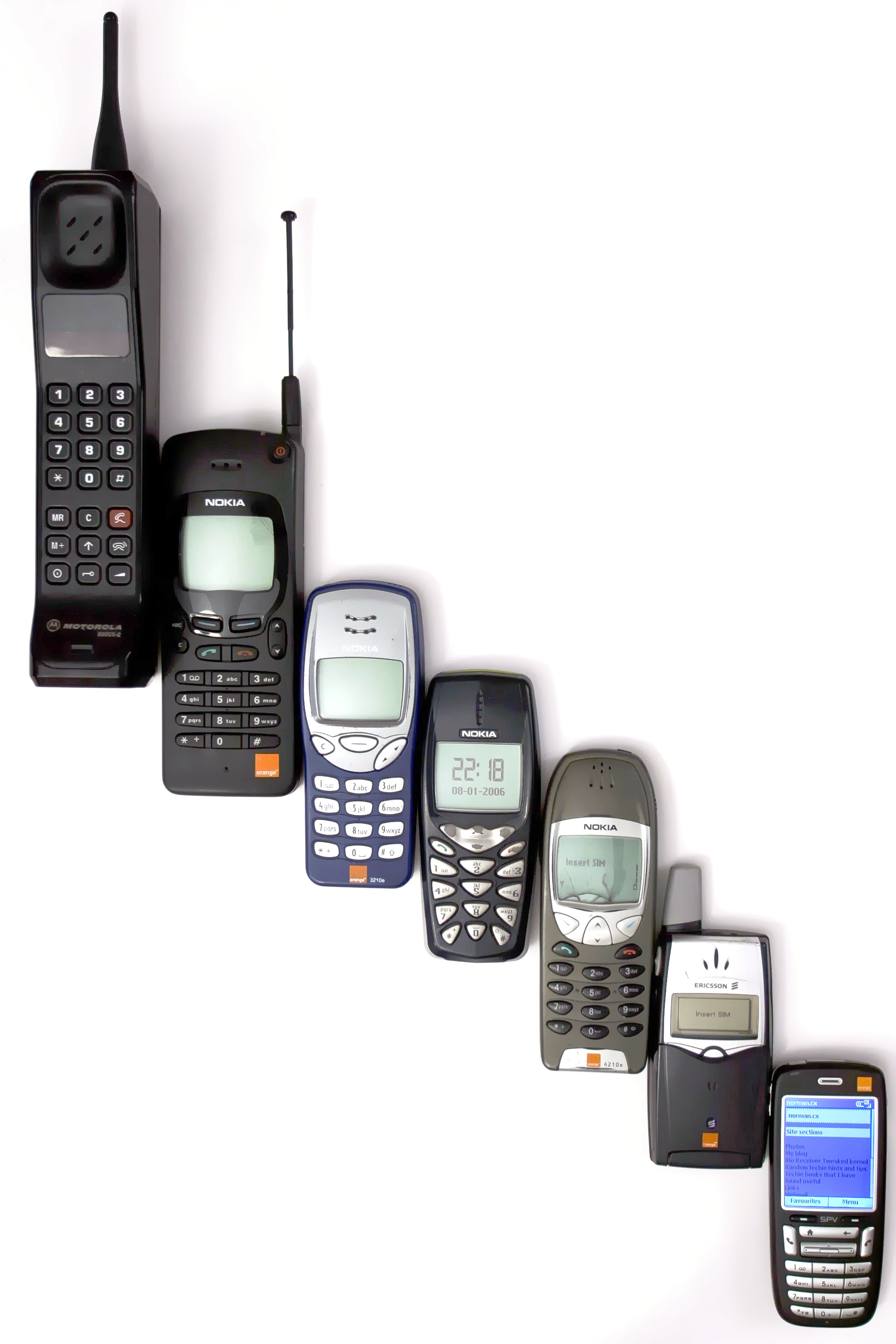
Сell phone

Game gadgets include the Nintendo Wii

 PlayStation 3

or the X-Box

Pencil in the lives of people (poll) 
Questionnaire
1. How often do you use it?
 a) Always  (30%)

b) Sometimes (50%)
c) Rarely (10%)
d) Never(10%)

2. Do you find it useful?
 a) Yes (60%)

b) No (10%)
c) Sometimes (30%)
d) I don’t know (0%)

3. Should it be improved or renewed?
 a) Sure (70%)

b) No use ( 0%)
c) Probably (0%)
d) No, it’s perfect!(20%)

4. Would you take it with you if you were on a desert island?
 a) Certainly (10%)

b) Only if I had nothing else(10%)
 c) No way (70%)

d) I’d need it to make friends with aborigines(10%)

5. Are there any chances that people will continue to use it in future?
 a) 0-25% (50%)

b) 26-50% (40%)
c) 51-75% (10%)
d) 76-100%(0%)


Week 2 Step1 Gadgets of the Past


                Find out the fascinating story behind our dependable friend, the pencil.
   For centuries it has been the faithful recorder of our thoughts and artistic abilities. With it men have created masterpieces of literature, children have transferred their imaginations to paper and artists have drawn superb pictures. Yet, throughout all of this, the humble work-horse behind it all has gone unrecognised. Who gives a thought to the pencil? Well, it's about time this injustice was corrected. So, lets take a closer look at our trusty servant - the pencil.

   The word pencil is derived from the Latin pencillus, meaning "˜painters' brush.' The earliest pencils were, in fact, fine brushes that hardly resemble our modern version. When graphite was discovered in Bavaria, however, the fine hairs of the brush were replaced with this new find and encased in wood. Graphite was originally known as plumbago - acting like lead -and up to this day people still believe that pencils contain lead, which is not the case.     The type of graphite used today wasn't discovered until 1564. This solid, high purity graphite gave a far better result than that previously used. This graphite was initially held in the hand without any covering, The mess it made of the writer's hand, however, became a major hassle and soon efforts were made to overcome this problem. The graphite was wrapped in a waxy material by some, enclosed in a metal tube by others and wrapped with cord or string-like material by still others. A wood encased graphite rod pencil wasn't manufactured until 1660. This was further refined in the late 1700s when a method of grinding graphite with clay to produce a much finer, more consistent and smoother pencil was found. Thus, the modern pencil was developed into a form which has remained substantially unchanged for 300 years.
   How is a pencil made? It all starts with the grinding of graphite and clay into a stiff, doughy consistency. This is then extruded through a small hole in a tungsten carbide die. The finished graphite is then cut into about 7 inch lengths. These individual "˜leads' are then dried and fired in a kiln and then impregnated with a lubricant to make them smoother for writing. The gradient of the pencil is dependant on the amount of clay initially added to the mixture.
  The wood used to encase the graphite must be soft enough for sharpening, yet stable enough that it will not bend. Red cedar is the most popular timber chosen for this purpose. The timber is first milled into slats about seven inches long, by two inches thick. Next, six half round grooves are machined along one side to accept the graphite leads. Then two such grooves are glued together with the lead in between them. After the glue has cured, the pencil is cut to shape by a special machine. Painting follows, and, finally, the name, identity and grade of the pencil are printed on the side. In all, 125 different operations have gone into the making of each pencil.              So, next time you utilise the humble pencil, take a moment to appreciate where it's come from and where you'd be if you didn't have it as your faithful transmitting device.

20.03.2011

Week 1 Step 2

gadget - a small tool or piece of equipment that does something useful or impressive.
gadget- a small piece of equipment that uses new technology.
gadget - a small device or machine with a particular purpose.
gadgeter - a person who designs, builds, or delights in the use of gadgets.


Week 1 Step 1

   A gadget is a small technological object (such as a device or an appliance) that has a particular function, but is often thought of as a novelty. Gadgets are invariably considered to be more unusually or cleverly designed than normal technological objects at the time of their invention. Gadgets are sometimes also referred to as gizmos.
   In the software industry, "gadget" refers to computer programs that provide services without needing an independent application to be launched for each one, but instead run in an environment that manages multiple gadgets. There are several implementations based on existing software development techniques, like JavaScript, form input, and various image formats.
   Tech gadgets refer to consumer electronics products like smartphones, laptops, mp3 players, tablets and the like. It's not a description of a particular type of electronic product, but a generic term used throughout consumers.
   The origins of the word "gadget" trace back to the 19th century. According to the Oxford English Dictionary, there is anecdotal evidence for the use of "gadget" as a placeholder name for a technical item whose precise name one can't remember since the 1850s; with Robert Brown's 1886 book Spunyarn and Spindrift, A sailor boy’s log of a voyage out and home in a China tea-clipper containing the earliest known usage in print.The etymology of the word is disputed. A widely circulated story holds that the word gadget was "invented" when Gaget, Gauthier & Cie, the company behind the repoussé construction of the Statue of Liberty (1886), made a small-scale version of the monument and named it after their firm; however this contradicts the evidence that the word was already used before in nautical circles, and the fact that it did not become popular, at least in the USA, until after World War I. Other sources cite a derivation from the French gâchette which has been applied to various pieces of a firing mechanism, or the French gagée, a small tool or accessory.
    Gadgeteer - inventor of the devices; inventor of technological innovations; lover of all possible devices, and devices.